


Update, July 3, 2026: Three days after this interview, Delhi’s Cabinet approved the EV Policy 2026. Everything the minister previewed below is now official. We’ve added the real numbers throughout this piece.
Two weeks ago, Delhi’s Cabinet Minister for Power sat down and admitted something most governments don’t say out loud: the last EV policy didn’t work for the people who actually ride electric every day. Two days ago, his government approved the replacement.
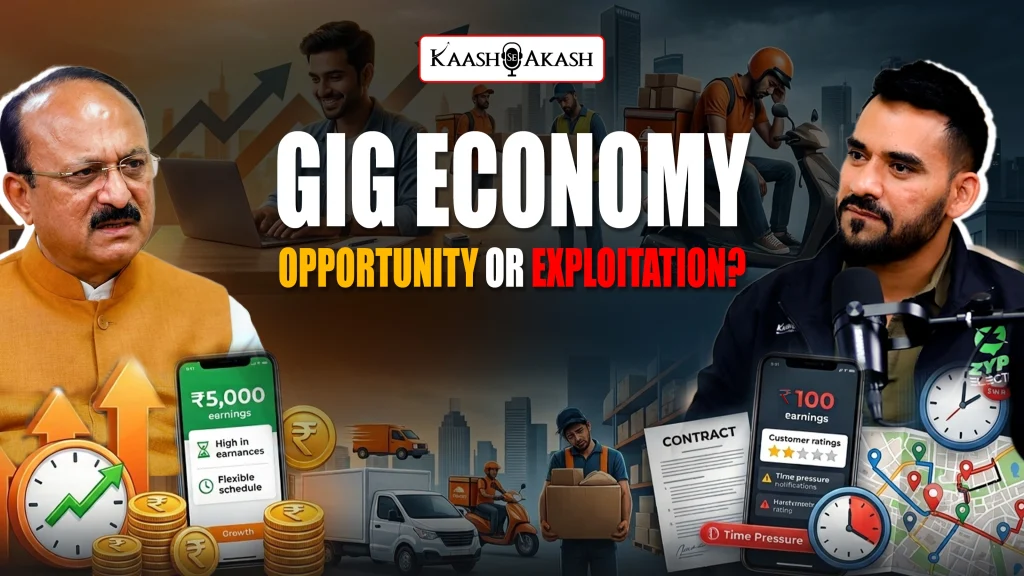
On the latest episode of KaashSeAkash, Zypp Electric co-founder and CEO Akash Gupta sat down with Ashish Sood to ask one blunt question: why hasn’t EV adoption reached the riders who need it most?
The answer, straight from the minister, was uncomfortable but honest and it turned out to be a preview of the policy Delhi just signed off on. Watch the full conversation below, then read what actually shipped.

Delhi EV Policy 2026: What’s Actually Approved
Here’s what’s real, effective July 1, 2026 through March 31, 2030, backed by a ₹15,000 crore investment:
| Category | What you get |
| Electric two-wheelers | ₹30,000 subsidy (year 1), ₹20,000 (year 2), ₹10,000 (year 3) |
| Electric three-wheelers | ₹50,000 / ₹40,000 / ₹30,000 across the same three years |
| Electric cars up to ₹30 lakh | 100% road tax and registration fee exemption |
| Scrappage (old petrol/diesel car) | Up to ₹1 lakh incentive |
| Scrappage (BS-IV two-wheeler) | Around ₹10,000 |
| Charging infrastructure | 32,000 public charging points planned citywide |
| Hybrid vehicles | Not eligible for incentives |
| New petrol/CNG two-wheeler registrations | Barred from 2028 |
| New petrol/CNG auto-rickshaw registrations | Barred from 2027 |
Subsidies are meant to be processed via direct benefit transfer within 60 days of application.
Now here’s the part that matters if you watched the interview above: notice that the two-wheeler subsidy is a flat ₹30,000 regardless of how many kilometers a rider logs. That’s exactly the gap Akash Gupta pushed the minister on two weeks before this was approved. A private buyer doing 15 km a day and a gig rider doing 120 km a day get the same incentive, even though the rider’s daily electric mileage is doing far more to cut fuel use and pollution. Worth watching how this plays out as the policy’s implementation details get finalized.
Why This Conversation Matters for Every Delivery Rider in Delhi
India has close to 1 crore two-wheeler riders working the gig economy today, delivering everything from groceries to parcels across every major city. Delhi alone carries one of the highest concentrations of this workforce, and it’s also the state with, in the minister’s own words, “the most revolutionary EV policy in the country.“
So why does EV adoption among daily riders still lag behind private car buyers?
Akash Gupta put that question directly to Minister Sood, drawing on eight years of building Zypp Electric, a platform that has helped over one lakh people earn ₹30,000 to ₹40,000* a month on electric scooters, many of them with no formal degree, no financial background, and no savings to start with.
“This Policy Is for the Rich”: The Gap in India’s Current EV Incentives
The most direct moment of the interview came when Akash raised a concern that anyone tracking India’s EV subsidy structure will recognize: the PM E-Drive scheme and existing EV policies reward big-ticket purchases, not daily use.
A buyer purchasing an expensive electric car or a premium scooter gets a meaningful subsidy. But the rider who logs 100 to 125 kilometers a day, the person whose shift to electric actually saves the most fuel cost and cuts the most pollution, gets comparatively little support.
Minister Sood didn’t dispute the point. He acknowledged that Delhi’s earlier EV policy was announced with intention but was never implemented with the seriousness needed. Subsidies meant to pull buyers away from petrol vehicles simply weren’t delivered, and the policy stalled before it could take off.
That’s the backdrop the newly approved Delhi EV Policy 2026 was built against. Whether the flat two-wheeler subsidy actually closes this gap for high-mileage gig riders, or just repeats the old structure with bigger numbers, is the open question worth watching as implementation rolls out.
What’s Actually Slowing Down EV Adoption, According to the Minister
Strip away the policy language, and the conversation surfaced four concrete bottlenecks that are still holding riders back from switching to electric:
1. The Mindset Barrier
Riders who already own a petrol scooter don’t have an obvious reason to switch. The minister described it as a simple psychological block: “I already have a vehicle, why should I give it up?”
2. Charging Availability on Long Routes
A rider planning a same-day trip outside the city, say to Murthal and back, needs confidence that charging infrastructure exists along the way. Right now, that confidence isn’t there. Past experience with public charging stations has been inconsistent, with the minister noting that a large share of existing charging points aren’t even functional, and most that are working still run at slow 12-15 volt speeds instead of the 60-120 volt fast chargers riders actually need.
3. Battery Health and Resale Value
This came up as one of the most specific gaps in the current system. When a rider wants to sell a vehicle or swap a battery, there’s no certified battery health card to prove the battery’s remaining life. The minister suggested this needs to become standard: every EV battery should carry a health certification from the manufacturer, the same way a used car carries a service history.
4. Battery Swapping Trust Issues
This bottleneck was, frankly, one of the sharper insights of the episode. Riders who buy a brand-new EV are reluctant to swap out a battery that’s only a few days old for one of unknown condition and age. The fix Akash pointed to, and one that’s already central to Zypp’s own model, is to remove the battery from vehicle ownership entirely. Riders pay per swap, not per battery, so the “is this a good trade” anxiety disappears completely.
Delhi currently has over 2,500 battery swapping stations set up through private operators, but as the minister pointed out, the stations themselves are only half the solution if the trust problem around swapping isn’t solved.
What Delhi’s Government Is Planning for Gig Workers
Beyond EV policy specifically, Minister Sood outlined a broader welfare push for gig and delivery workers under Delhi Chief Minister Rekha Gupta’s government, including:
- Cooling stations and rest points for riders during peak summer heat, with ORS and water access built into Atal Canteen locations
- Charging points for personal devices at rest stations
- Coordination with Delhi Police on rider safety
- A dedicated labour ministry study into gig worker welfare, insurance access, credit and loan eligibility, and even housing structures like shared bunk accommodation for riders who migrate to the city for work
He was direct about the current gaps too: gig workers who’ve been earning consistently for two years still can’t access basic credit or loan products, and there’s no education platform built for their children. These, he said, are being actively studied for the next phase of policy.
Delhi’s ₹325 Crore Bet on Startups
The conversation also touched on Delhi’s broader startup ecosystem push. The minister confirmed a new ₹325 crore startup policy aimed at building incubation centers across schools, colleges, and universities over the next five years. A recent Startup Yuva Festival run by his ministry already handed out ₹1 lakh grants to 100 young entrepreneurs and ₹10 lakh grants to 10 more, with the minister extending an open invitation for more Delhi-based founders and gig entrepreneurs to be included in future rounds.
The Bigger Picture: EV Policy Is a Rider Policy
What makes this episode worth watching isn’t just the political headline. It’s the specificity. Most EV policy discussions stay at the level of subsidies and manufacturing targets. This conversation went straight to the operational details that actually decide whether a delivery rider switches to electric: battery certification, swap station trust, fast-charger availability on highways, and welfare infrastructure that treats gig work as a legitimate livelihood, not a fallback.
For Zypp Electric riders, several of these bottlenecks, ownerless battery swapping, per-swap pricing instead of per-battery cost, and a rapidly expanding charging network, are already built into the platform today. With the approved policy putting real money behind charging infrastructure and scrappage, the biggest remaining gap for daily riders is the one this interview flagged early: a subsidy structure that still doesn’t scale with how much a vehicle is actually used.
Frequently Asked Questions about Delhi EV policy for gig workers
Yes. Delhi’s Cabinet approved the EV Policy 2026 on June 30, 2026. It took effect July 1, 2026 and runs through March 31, 2030, backed by a ₹15,000 crore investment in incentives, tax exemptions, and charging infrastructure.
₹30,000 in the first year of the policy, dropping to ₹20,000 in year two and ₹10,000 in year three, alongside a scrappage incentive of around ₹10,000 for retiring a BS-IV or older petrol two-wheeler.
The scheme’s subsidy structure favors higher-value vehicle purchases like cars and premium scooters, which see lower daily usage. Gig riders who log 100+ km a day and generate the biggest fuel and pollution savings receive comparatively smaller incentives. Delhi’s newly approved policy sets a flat two-wheeler subsidy regardless of usage, so this gap hasn’t fully closed yet.
Private operators have already deployed over 2,500 battery swapping stations across Delhi, though infrastructure gaps and trust issues around battery age and health remain unresolved.
Zypp Electric offers electric scooters on a daily rental model with no battery ownership required, helping riders start earning from day one. Apply to become a Zypp rider here.
This article is based on the KaashSeAkash podcast, hosted by Zypp Electric co-founder and CEO Akash Gupta. Watch the full episode above for the complete conversation.
Related reading: EV Scooter Rental: Why It’s the Future of Urban Mobility in India | Delivery Jobs in India 2025: A Green Revolution on Two Wheels | Who We Are
